Eid is a time of heightened demand for footwear in Bangladesh, as consumers flock to stores and markets to purchase new shoes for the festive occasion. While established retail brands such as Apex, Bata, Orion, and Bay dominate the high-end market, a significant portion of the footwear business comes from local suppliers, especially in regions like Kaluhati Shoe Village. The question arises: Is the Eid business more significant for established brands or for local manufacturers like Kaluhati?
The Birth of Kaluhati Shoe Village
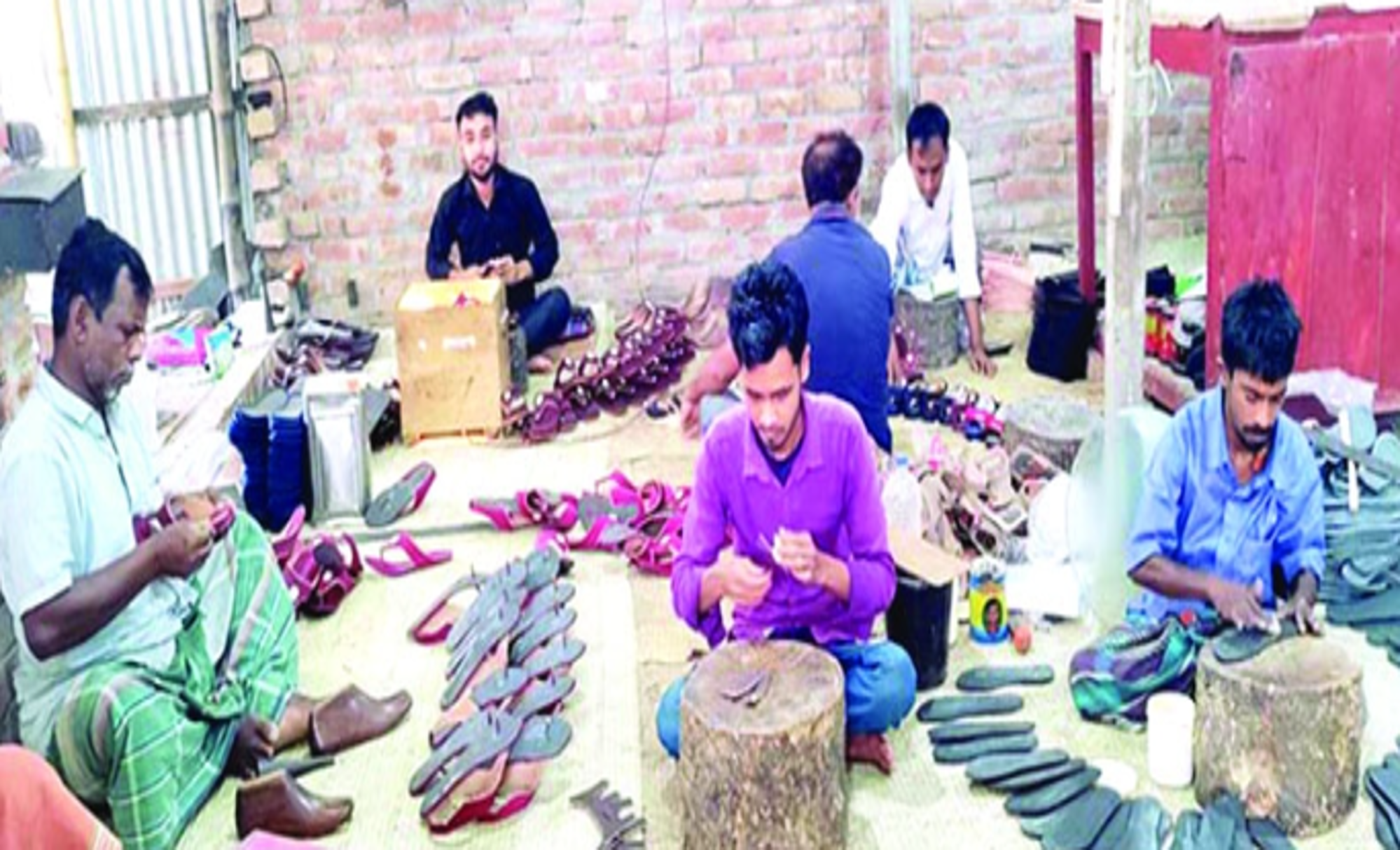
Kaluhati, a village under Charghat upazila in Rajshahi, has become known as the “Shoe Village” due to its thriving footwear industry, with many residents involved in shoe manufacturing. The village has gained a new name as the ‘Shoe Village’ of Rajshahi. Kaluhati Shoe Association, with around 120 members, puts out 90 percent of its total production in leather, with 10 percent shoes made of jute and rexine.
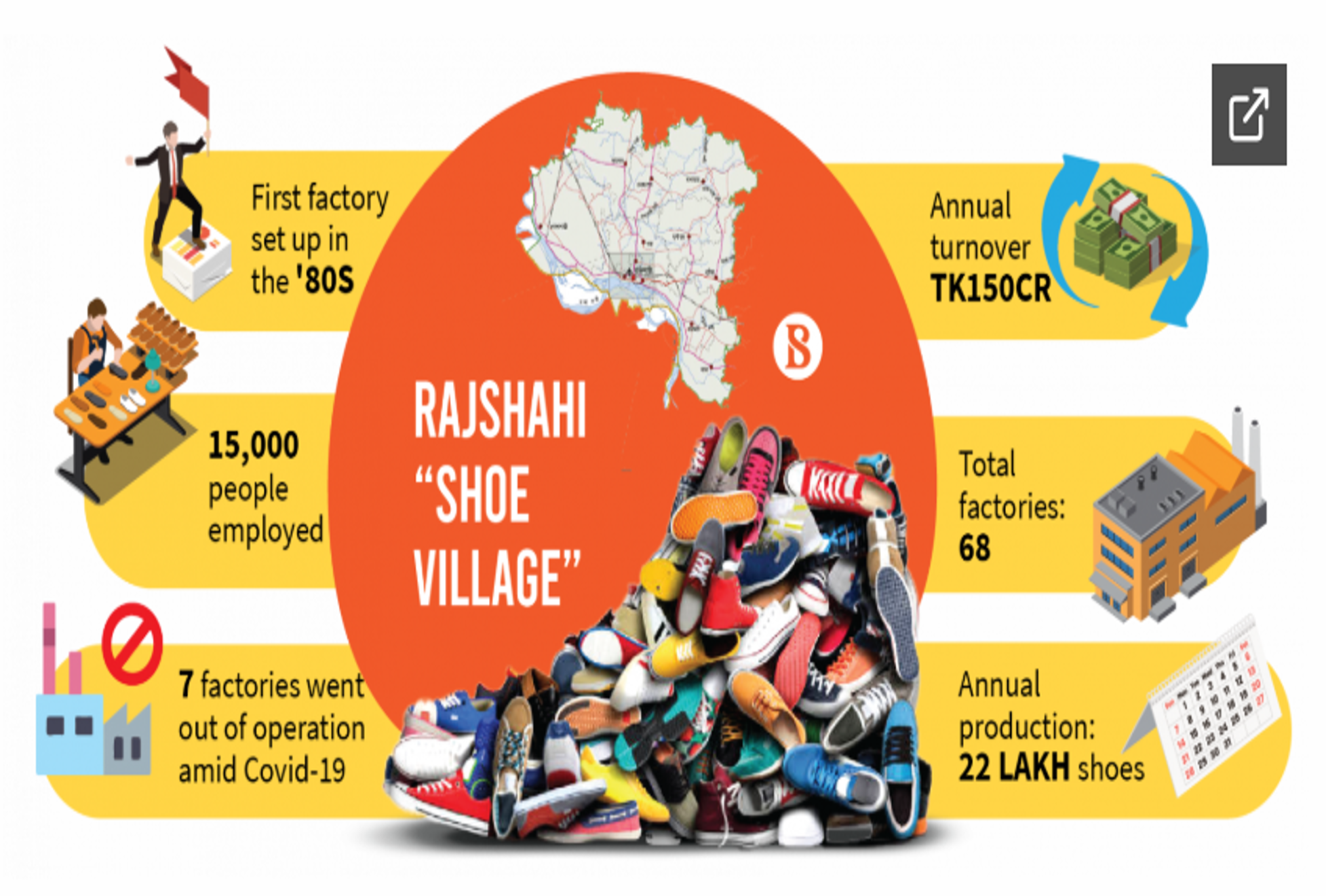
Kaluhati’s journey into the footwear industry began in the early ‘80s, established the first shoe factory, Mukta Shoe, in 1981. Since then, the village has grown significantly, with over 68 factories producing an array of leather, jute, and rexine footwear.
Kaluhati Shoe Village: A Powerhouse of Mass Market Production:
- Annual Production: Kaluhati produces over 22 lakh shoes each year, with the Eid period accounting for about 30-40% of that total. This means over 6 lakh pairs of shoes are produced spEconomic Impact: The annual turnover of Kaluhati’s shoe industry is approximately Tk 150 crore, with a significant chunk coming during Eid sales. The Eid period alone generates an estimated Tk 45-60 crore in revenue.
- Employment Surge: Over 15,000 people are employed directly or indirectly in the footwear industry in Kaluhati, with 30% of the workforce being women. During Eid, temporary workers and overtime hours increase production capacity significantly.
- Production Breakdown: Kaluhati’s shoes are predominantly made of leather, comprising 90% of the total production. The remaining 10% consists of jute and rexine shoes. Most raw materials are sourced from Dhaka and Chattogram.
- Local Distribution: The shoes produced in Kaluhati are distributed across various districts, including Dhaka, Khulna, and Rajshahi, meeting the demands of the mass market, especially in rural and suburban areas.
Comparative Analysis: Volume vs. Profit Margins
- Volume of Sales: Kaluhati’s high-volume, low-cost approach means that during Eid, they likely outpace established brands in terms of total units sold.
- Revenue Comparison: Although popular footwear brands like Bata and Apex generate higher revenue per unit, Kaluhati’s volume of sales during Eid contributes to a substantial total turnover. The estimated annual turnover for Kaluhati is Tk 150 crore, with Eid sales accounting for 30-40% of this figure, while established brands see significant revenue boosts, but their overall production volume is lower than that of Kaluhati.
- Sales Surge During Eid: Kaluhati Shoe especially during Eid. Kaluhati’s production volumes, which reach over 6 lakh pairs during the Eid season alone, ensure that it captures a significant portion of the footwear market, particularly among the working class and rural populations
Rise of different Footwear Hubs following Kaluhati
Challenges Faced by Kaluhati
- Pandemic Impact: In recent years, the industry has faced significant challenges due to the pandemic, leading to a loss of Tk 80 crore and a drop in production from 22 lakh shoes to 14 lakh shoes annually. Around 25% of workers were displaced, and 7 factories shut down. With 25% of goods unsold and a significant reduction in production, Kaluhati struggled to maintain its market presence. However, the industry is recovering with the help of local support.
- Financing and Automation: Kaluhati’s shoe industry has high potential, The lack of automation and modern machinery which introduction could significantly boost production, with the industry estimating a potential turnover increase to Tk 500 crore with proper investment.
- Government and Institutional Support: The SME Foundation has pledged Tk 35 lakh worth of machinery for the industry, which will help improve production capacity and product quality. The government’s support in financing and access to machinery is expected to aid Kaluhati’s recovery and expansion in the coming years.
While established brands like Apex, Bata, and Bay dominate the upper market with their premium offerings, Kaluhati Shoe Village has a larger share of the overall volume of footwear sold during Eid.
However, brands still retain their stronghold in the premium segment, where consumers are willing to pay more for higher-end designs. Thus, while Eid provides a substantial business boost for both local suppliers and established brands, Kaluhati’s role in catering to the mass market remains indispensable for the country’s footwear industry.
Source: New age, The business Standard, Bangladesh Sangbad Sangstha