The stiffness of a shoe’s midsole—the layer between the insole and outsole—has a direct effect on the forces transmitted to the Achilles tendon during movement. Understanding this relationship is crucial for runners, athletes, and anyone prone to tendon injuries.
How Midsole Stiffness Affects the Achilles
Stiffer Midsoles:
- Limit how much the shoe bends during push-off.
- The calf muscles have to work harder to extend the foot, which increases the load on the Achilles tendon.
- Sprinters or jumpers often benefit from stiffer shoes because they improve energy return, but overuse can lead to tendon strain if training intensity is too high.
Softer Midsoles:
- Compress more easily, absorbing impact and reducing peak forces on the tendon.
- Can be more comfortable for long-distance running, but may increase strain elsewhere in the foot and lower leg.
Real-World Examples:
Elite Marathon Runners: Many use shoes with moderately soft midsoles to reduce cumulative Achilles stress over long distances.
Sprinters or Track Athletes: Often wear shoes with stiff midsoles or embedded plates to maximize push-off efficiency, but these athletes need careful Achilles conditioning to prevent injuries.
Injury Recovery: Athletes recovering from Achilles tendinopathy are advised to gradually transition to stiffer shoes, allowing the tendon to adapt to higher forces over time.
Practical Tips for sports: As we age, our muscles and joints become more sensitive, making footwear choices increasingly important. Shoes that are too soft or too stiff can amplify stress on the lower leg, particularly the Achilles tendon and calf. Modern performance shoes with stiff midsole plates may improve energy return but can also increase tendon load and torque, raising injury risk. Practical solutions include selecting shoes with a slight heel lift, greater forefoot flexibility, or moderate midsole stiffness to reduce strain, improve foot mobility, and support overall durability. Thoughtful footwear choices can significantly influence daily comfort, performance, and long-term joint and tendon health.
- Gradually increase training intensity when switching to stiffer shoes.
- Include calf strengthening exercises to support the Achilles tendon.
- For runners prone to Achilles injuries, consider midsoles with moderate stiffness and good cushioning.
- Track performance changes and tendon comfort; discomfort can indicate excessive loading.
Midsole stiffness directly influences how much force the Achilles tendon experiences during movement. Proper shoe selection, combined with progressive training and tendon conditioning, can improve performance while minimizing injury risk.
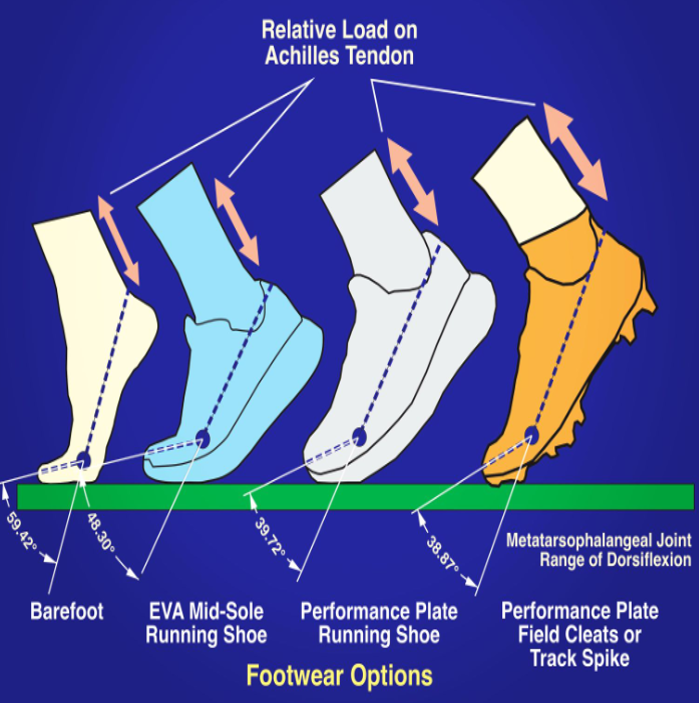
Source: Derek M Hansen, Sprint coach and internet