The United States has officially implemented its adjusted tariff list effective from 1st August 2025, placing Bangladesh under a 20% duty for leather and footwear exports. While this still poses challenges, it is notably lower than the initially proposed 35%, offering some relief to exporters and policymakers alike.
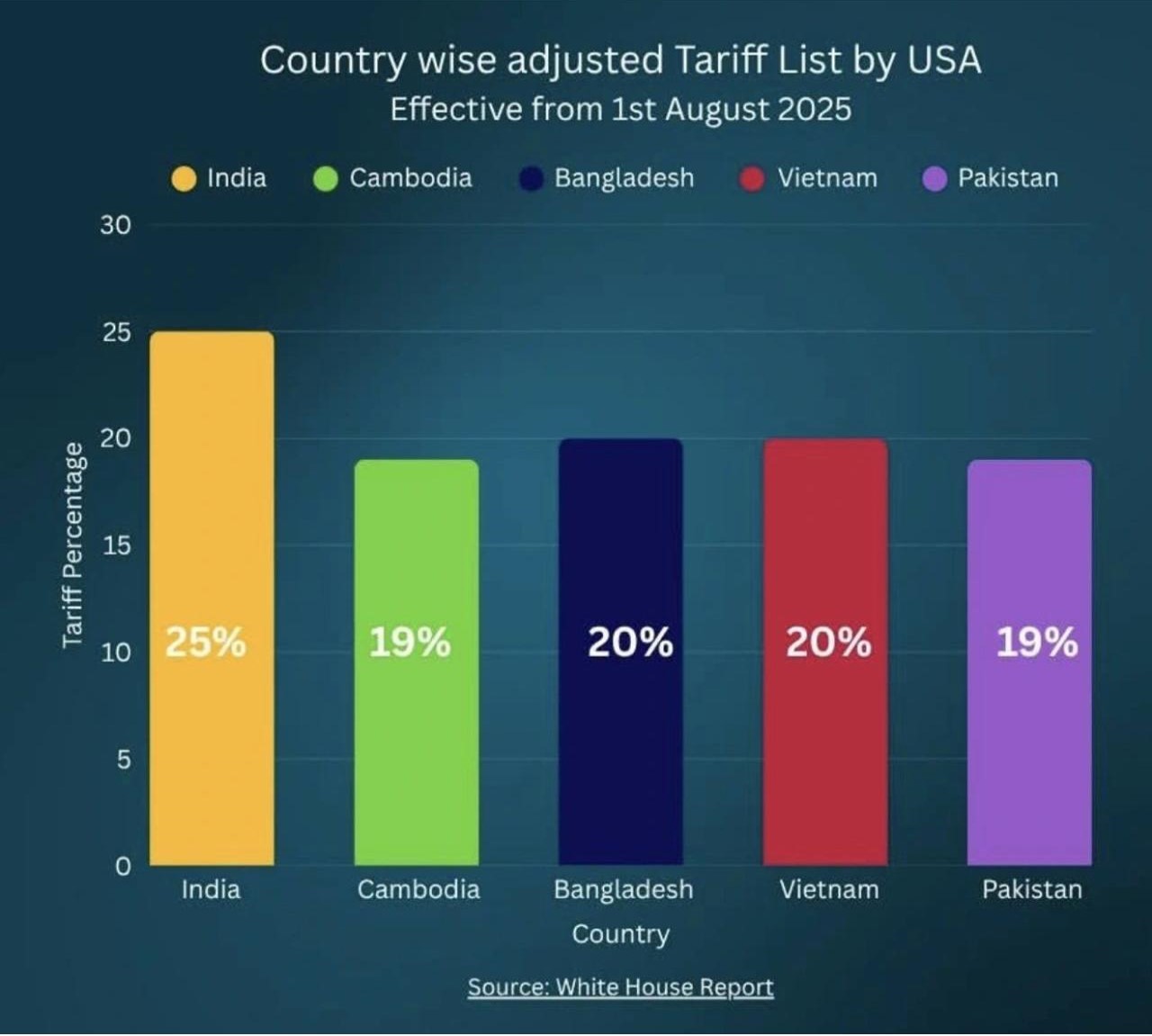
Based on the comparison with other countries, Bangladesh’s rate of 20% is:
- Lower than India (25%), giving Bangladesh a relative advantage over Indian goods.
- Roughly on par with Vietnam.
- Slightly higher than Cambodia and Pakistan (both 19%).
Bangladesh is competitively positioned—its tariff rate is relatively moderate. It gains over India, matches Vietnam, but faces slightly higher duties than Cambodia and Pakistan.
Competitive Positioning:
- Leather & footwear face higher effective duties (28–32%) than the general average tariff (20%), hurting price competitiveness.
- Compared to India (25%) and others, Bangladesh still fares better on average—but its specialized sectors may suffer due to sector-specific hikes.
Impact on Bangladesh’s Leather & Footwear Sector:
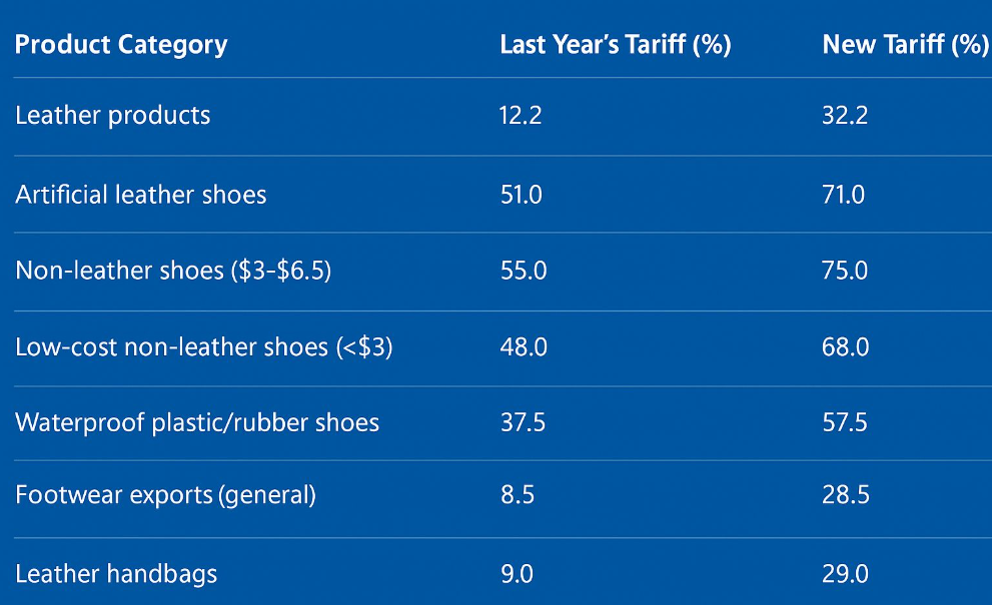
Opportunity vs Threat:
- Threat: Steep total duties in leather and footwear may suppress exports, trigger buyer contract delays or cancellations, and create price pressure.
- Opportunity: Because Bangladesh’s general tariff rate is lower than India’s and on parity with Vietnam, it may attract some shifting trade from those markets—if it can sustain competitiveness and negotiate reductions.
Final Verdict
General trade: Bangladesh’s 20% tariff offers a modest advantage over India and parity with Vietnam, making it relatively competitive.
- Leather & footwear: Face higher tariffs than average, risking export decline unless the sector negotiates relief or explores diversification.
- Overall: Bangladesh stands in a moderately favorable position compared to some peers but will likely be harmed in the leather & footwear segment unless mitigating actions succeed.
Source :White House report & Prothom Alo